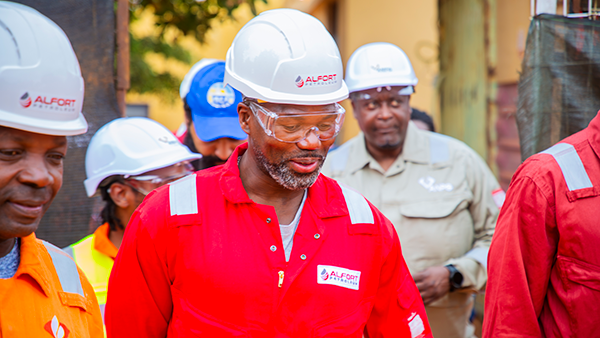
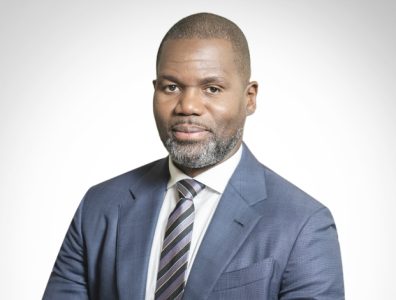
Gianni Gaspar-Martins, founder of Alfort Petroleum, talks to The Energy Year about updates from the company’s Block KON 8 and the company’s perspective on Angola’s new incremental production legislation. Alfort Petroleum is a local integrated oil and gas company that works in the upstream sector.
What is the latest on operations at Block KON 8?
We’ve successfully completed the seismic acquisition phase for KON 8. Initially, the regulator required a minimum work commitment of a drilled well, but that was later revised to 100 kilometres of seismic data. Alfort has exceeded that requirement by acquiring 210.5 line kilometres of 2D seismic data.
Currently, we’re in the final stages of interpreting this data, having already concluded acquisition and processing. The results are promising, and we’re confident in progressing to the next phase. Under current regulations, that means drilling a well. We expect to begin drilling either in the last quarter of 2025 or more likely in the first quarter of 2026.
What makes you confident about the block’s potential?
Our team has been methodical in our approach. This is a high-risk industry, and we don’t consider skipping steps as an option. A well was drilled back in the 1960s within our concession that we suspect was misplaced. With today’s seismic technology, which wasn’t available at that time, we’ve identified where we believe the error occurred.
We now have a better understanding of the subsurface and are targeting areas with real potential. One target in particular looks very promising, and that’s why we’re excited about the prospects for KON 8.
Why is KON 8 attractive to potential partners?
The main reason is because we’ve already de-risked it considerably. The seismic acquisition and processing are complete. We’ve identified promising prospects and are working on a conceptual field development plan. We’re not just holding a licence. We’ve developed a real understanding of the block. That changes everything for a potential partner. They’re not coming in blind but rather are coming in with significant technical groundwork already laid.
Why don’t you see mature fields as the ideal starting point for new operators?
It depends on where and how you start. Mature fields can be cash intensive, especially offshore concessions that still require significant capital expenditure. If you enter those projects stretched thin financially, that’s dangerous for a new company.
Greenfield onshore exploration is more manageable, such as what we’ve done with KON 8. We’ve completed our seismic acquisition for just over USD 2 million, and we’ll spend another million on studies. It’s an affordable way to see if you’re on the right track before committing larger resources.
We are interested in seizing mature fields opportunities. However, our first goal is to finish the current stage that we are at in KON 8. We have to advance our G&G [geological and geophysical] studies, for example, by reprocessing our existing 2D seismic lines, finalising the interpretation and calculation of resources and planning a 3D seismic campaign. We need to continue to de-risk our asset as much as possible to attract additional investors into our concession.
We are very excited about our initial findings, and our development cost will be approximately USD 400 million-500 million. We are committing to drill our first exploration well in the first quarter of 2026, and only afterwards will we look at these mature-field opportunities.
Although mature fields present a low-risk investment opportunity because they are producing, we cannot ignore the investment commitments that are necessary. Also, for a small company such as ours, we did not feel like we would fit the profile that majors want as partners.
Therefore, it was important to build a suitable profile and show that we belong. Now, with the work that we are doing in KON 8, we certainly belong, and we will be respected enough to bid for mature-field opportunities, both by our regulator, the ANPG [National Oil, Gas and Biofuels Agency], and by peers from the industry.
Font: The Energy Year