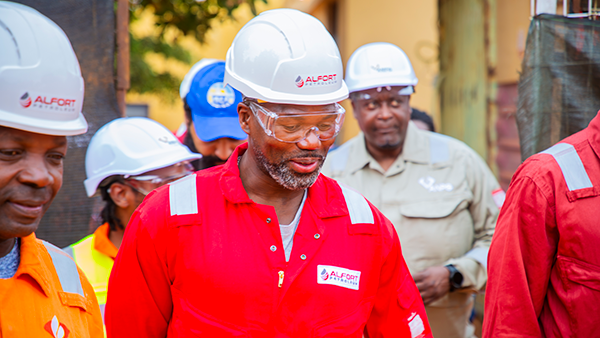
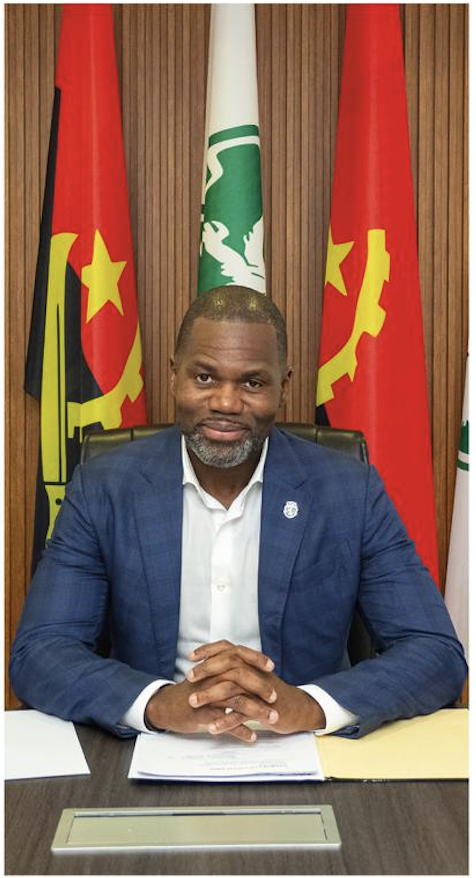
THE YOUNGEST PRESIDENT IN THE 105 YEARS OF SPORTING CLUBE DE LUANDA TALKS ABOUT STRATEGY, finances, and the challenge of managing the club with elite ambitions. The monthly cost to keep the “Lion” standing? About 75 million Kz. A Petroleum Engineer by training, a basketball player and a coach, the young leader of the centenary Sporting Clube de Luanda is redesigning the destiny of one of the oldest emblems of Angolan sport, applying to sports management the same analytical logic with which he works in the oil industry. Between stories of basketball and billion-kwanza projects, he also CEO of the American oil company Alfort reveals the numbers behind the resurrection of the “Leão dos Coqueiros” (the Lion of the Coconut Trees): “I am an engineer, but, above all, I am a Sporting fan.” This is how Gianni Martins defines himself, when he is asked about who sees the leadership of a historic club not as a position, but as a way of management. His education at the University of Tulsa in the USA and his experience at the helm of Alfort are the pillars of an approach that mixes club passion with accounting.
In charge of Sporting, which remained inactive for 27 years, the young leader implemented a clear strategy from day one: “Our first step was to return the club to competition. Putting the teams to play was the only way to reactivate the brand and its commercial value.”
The sporting results confirm the thesis. In one year, the men’s basketball team reached the semi-finals of the Unitel Basket and the women’s team became national champion, securing direct entry to the African League. In handball, the third place, behind the continental powerhouses Petro de Luanda and 1º de Agosto, and the national title could complete a picture of immediate sporting success. “From zero to one hundred, we went from minus one hundred and are now at minus five,” affirms Martins, summarizing with a tangible indicator the club’s financial starting point.
THE LION’S NUMBERS
To sustain this ambition, the structure has a monthly operational cost of approximately 75 million kwanzas, a value supported by a core base of members and businessmen. The next big leap, however, depends on a capital investment: the construction of its own pavilion, a project budgeted at “almost one billion kwanzas.” The infrastructure, explains Martins, will not be an asset with high social capital, but with financial solidity. The ability to mobilize capital through attractive brand value through sporting success, demonstrates a vivid model for the revitalization of assets. The challenge, common to many businesses, is the scaling this initial rescue phase into a sustainable activity model, where the large investment in infrastructure transforms into regular cash flows, reducing dependence on external financing.
FINANCIAL ANALYSIS
Gianni Martins’ management offers a case study in the turnaround of an institution with high social capital, but without financial solidity. The ability to mobilize capital through attractive brand value through sporting success, demonstrates a vivid model for the revitalization of assets. The challenge, common to many businesses, is the scaling this initial rescue phase into a sustainable activity model, where the large investment in infrastructure transforms into regular cash flows, reducing dependence on external financing.
Font: www.economiaemercado.co.ao | January 2023