Ambition plays a central role in any serious trajectory. It fuels growth, expands perspective and strengthens one’s willingness to operate in demanding environments. The problem arises when ambition is mistaken for constant acceleration—as if high performance required living in a permanent state of reaction, with an agenda dominated by pressure, urgency and excess.
I have reflected on this often because, in leadership, business and public responsibility, it is common to see highly capable individuals lose the quality of their decision-making—not due to a lack of talent, but due to accumulated fatigue. When the pace becomes unsustainable, clarity begins to deteriorate. And when clarity fades, even competence loses its strength.
For a long time, the prevailing idea has been that performing well means enduring more, responding faster and being constantly available. At first glance, this may seem efficient. However, it does not sustain a long-term career with quality. It sustains short bursts of intensity. It sustains moments of extreme delivery. What it does not sustain, with the same consistency, is a solid, mature and well-governed trajectory.
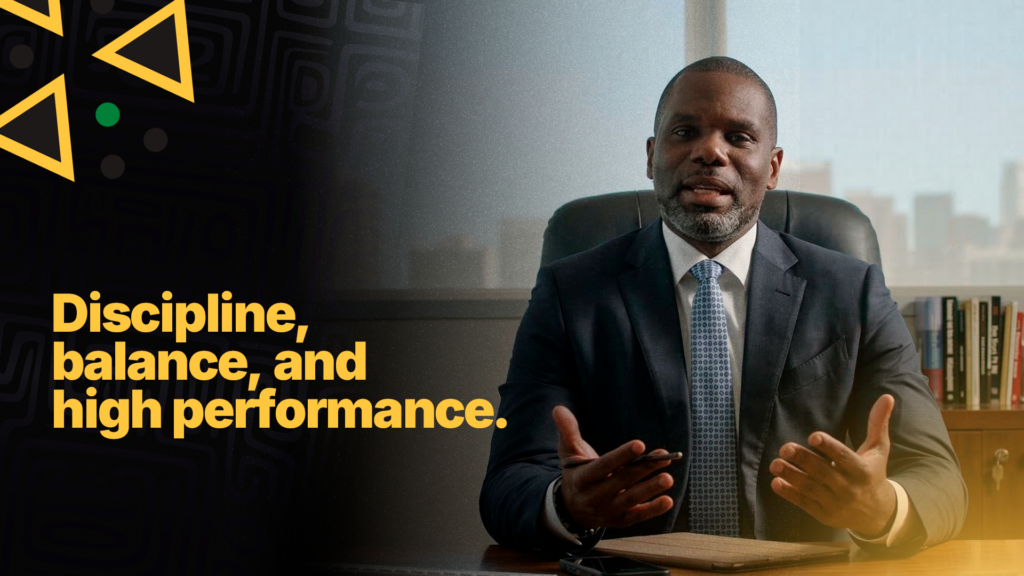
High performance is not defined solely by effort. It is defined by how one manages time, energy and decision-making capacity.
Those who lead understand that not everything can—or should—be resolved impulsively. Certain decisions require context, careful interpretation and the mental space to think with depth. There are days when the greatest risk is not a lack of work, but the fragmentation of focus. Agendas can become so overloaded that they cease to create real value, overtaken instead by interruptions, reactions and noise.
It is at this point that discipline transcends personal virtue and becomes a strategic asset.
In this context, discipline is not rigidity. It is the ability to organize one’s presence. It is about protecting priorities, discerning what truly requires immediate response, and recognizing that an unstructured agenda compromises the quality of execution. Those who fail to protect time for thinking begin to decide purely under pressure. And leadership that operates under constant pressure inevitably loses depth, precision and perspective.
I have also emphasized an idea that does not always receive the attention it deserves: balance is not peripheral to high performance. It is structural to it.
Sleeping well, pausing when necessary, preserving space for deep work and managing intensity with maturity do not weaken ambition—they sustain it. The body may remain present during prolonged fatigue, but the mind no longer operates with the same clarity. Listening shortens, irritation increases, the ability to analyze complex scenarios diminishes, and the quality of decisions begins to fluctuate.
This kind of wear rarely appears all at once. It settles gradually, often disguised as productivity. The individual remains busy, responsive and seemingly active—but no longer produces with the same depth, nor leads with the same lucidity.
For this reason, when discussing high performance, I believe we must also speak about rhythm. The market tends to admire intensity, but what truly builds enduring careers is consistency. And consistency is not born from excess—it is born from method, organized presence and the ability to maintain standards even under demanding conditions.
Those who learn to manage their own intensity protect the quality of their work, maintain healthier professional relationships and reduce the hidden cost of decisions made without adequate reflection. This has a direct impact on leadership, teams, business outcomes and the way trust is built over time.
There is also another essential dimension: personal discipline is a form of respect for others. When someone preserves their clarity, organizes their time effectively and operates with discernment, they improve how they respond, how they lead processes and how they honor commitments. The benefit is no longer individual—it extends to the quality of the environment, the stability of operations and the confidence others feel when working with that individual.
Perhaps this is why I increasingly value a form of high performance that is less performative and more conscious—less focused on displaying intensity and more committed to the quality of presence, decision-making and continuity. In high-responsibility roles, this distinction matters. It shapes thinking, relationships, delivery standards and the longevity of one’s trajectory.
Ambition remains a powerful force. But without discipline and balance, it comes at a cost. Those who seek to build something enduring must understand early on that sustainable performance requires more than willpower. It requires internal structure, method and the maturity to recognize that managing one’s own energy is also part of strategy.
In the end, high performance is not measured by how much one can endure. It is measured by the ability to continue delivering with clarity, consistency and responsibility over time.