There are moments when a country needs to talk less about potential and more about capability.
Angola has resources, youth, ambition, and a relevant position in the energy sector. But none of these elements, on their own, guarantees development. What turns opportunity into results is the quality of the people who design, operate, decide, correct, and deliver.
This, for me, is a central point in the year when energy needs to execute.
I recently had the opportunity to return to the classroom, this time at the MIT Sloan School of Management, in Cambridge. After many years on the road, corporate responsibilities, social projects, and difficult decisions, going back to studying was an important reminder: leadership that stops learning begins to lose its capacity to serve.
Contact with new methodologies, different markets, and leaders from various parts of the world reinforced something I have always believed. The future of energy will be increasingly technological, demanding, competitive, and pressured by efficiency. But at the center of it all, the human being will remain.
There is no energy transition without well-trained engineers.
There is no operational safety without trained teams.
There is no productivity without management discipline.
There is no innovation without young people exposed to science, technology, and responsibility from an early age.
When we talk about energy, the debate often gets stuck on natural resources, blocks, investments, contracts, and infrastructure. All of that is important. But there is a prior question that Angola needs to face seriously: who is going to execute?
Executing requires technical training, ethics, method, and a sense of country.
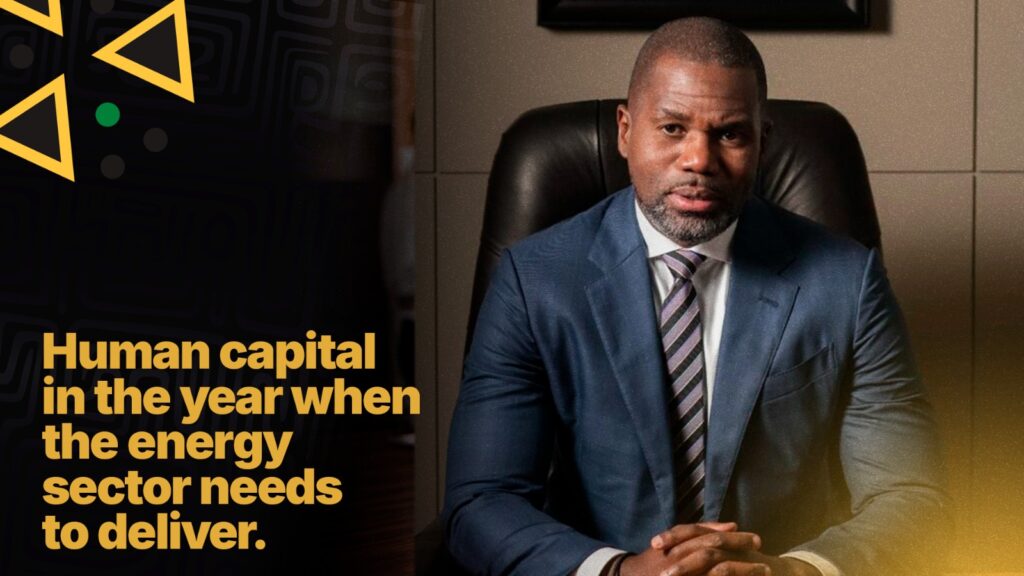
The energy sector doesn’t just need labor. It needs human capital. People capable of understanding complex processes, operating with rigor, respecting safety standards, interpreting data, handling technology, leading teams, and making decisions under pressure.
The difference between a workforce and human capital lies in preparation.
A workforce can fill positions. Human capital creates value, improves processes, reduces waste, protects lives, increases efficiency, and helps the country retain knowledge. In a strategic sector like energy, that difference defines competitiveness.
That is why I believe Angola needs to invest more consistently in four areas.
The first is technical training connected to market realities. Young people need to study with closer contact with industry, laboratories, technology, geology, engineering, management, and maintenance. Knowledge needs to arrive earlier and with more hands-on practice.
The second is a culture of execution. We must train people who know how to start, follow through, measure, and finish. The country needs good plans, but it needs even more people capable of turning plans into real deliverables.
The third is professional ethics. Energy involves risk, environment, safety, communities, and national interest. Those who work in this sector need to understand that every decision has consequences. Technical competence without responsibility can become dangerous.
The fourth is international exposure. Angola must learn from the world without losing awareness of its own reality. Studying abroad, exchanging experiences, and learning about other models only make sense when that knowledge comes back to improve what we do within the country.
This is also why, through the Gianni Gaspar Martins Foundation, I have championed education, science, and youth as long-term investments. Projects such as Kandengues Cientistas, GeoStratos, and other capacity-building initiatives exist because I believe the future begins long before someone’s first job. It begins when a child learns to ask questions, when a young person discovers they can solve problems, when a community realizes that knowledge is also dignity.
Angola’s human capital will not be built in universities alone. It will be built in schools, in families, in companies, in foundations, in clubs, in communities, and in the examples we choose to value.
Energy needs technology, but it also needs character. It needs investment, but it also needs discipline. It needs vision, but it also needs daily execution.
When I look at Angola, I see a generation eager to participate. I see young people who want to work, learn, start businesses, and build a path with dignity. The responsibility of those who lead is to create the conditions for that will to find method, training, and opportunity.
Our greatest challenge is not just producing energy. It is training people capable of turning energy into development.
That is what I brought back with me from MIT. The certainty that learning remains one of the most serious forms of leadership. And the conviction that Angola will only execute its true potential when it treats human capital as a national priority.
The country’s future will not be built only by those who have resources.
It will be built by those who know how to prepare people to execute with knowledge, responsibility, and vision.